Struggling with how to stop comparing yourself to others? You’re not alone. In 2026, the pressure to measure up feels constant, leaving many feeling inadequate. We all scroll, see highlight reels, and then feel that familiar sting of not being enough. But there’s a path to genuine contentment, one that doesn’t involve chasing someone else’s version of success. This guide will show you how to reclaim your peace and focus on your unique journey. Let’s turn that comparison trap into a launchpad for your own fulfillment.
Why Seeing Social Media as a Performance Boosts Your Self-Esteem
Imagine scrolling and knowing that what you’re seeing is often a carefully crafted highlight reel. It’s easy to forget that people curate their online lives. This awareness is your first tool against comparison.
When you remember this, your own reality feels less lacking. You start to see the curated perfection for what it is: a performance, not always genuine life.
This shift in perspective is powerful. It frees you from the need to measure your own journey against someone else’s filtered version. Your progress is valid, regardless of what others choose to share.
Featured in 2026: The provided text discusses strategies to stop comparing oneself to others, emphasizing internal progress, self-acceptance, and mindful shifts. It highlights practical steps like limiting social media, practicing gratitude, and reframing comparison as inspiration. It also touches upon the importance of identifying personal strengths and acknowledging that others’ lives are not fully visible.
Unlocking Inner Peace: Your Definitive Guide to Overcoming Comparison in 2026
Referência: vocal.media
I often hear from people struggling with the relentless pressure of comparison. It’s a silent battle many of us face, especially in today’s hyper-connected world. But I can tell you, achieving inner peace by letting go of comparison is not just a dream; it’s an attainable reality. This guide will equip you with the insights and strategies you need to reclaim your unique path.
Aspect
Key Insight
Actionable Step
Understanding Comparison
It’s often rooted in insecurity and a misperception of others’ realities.
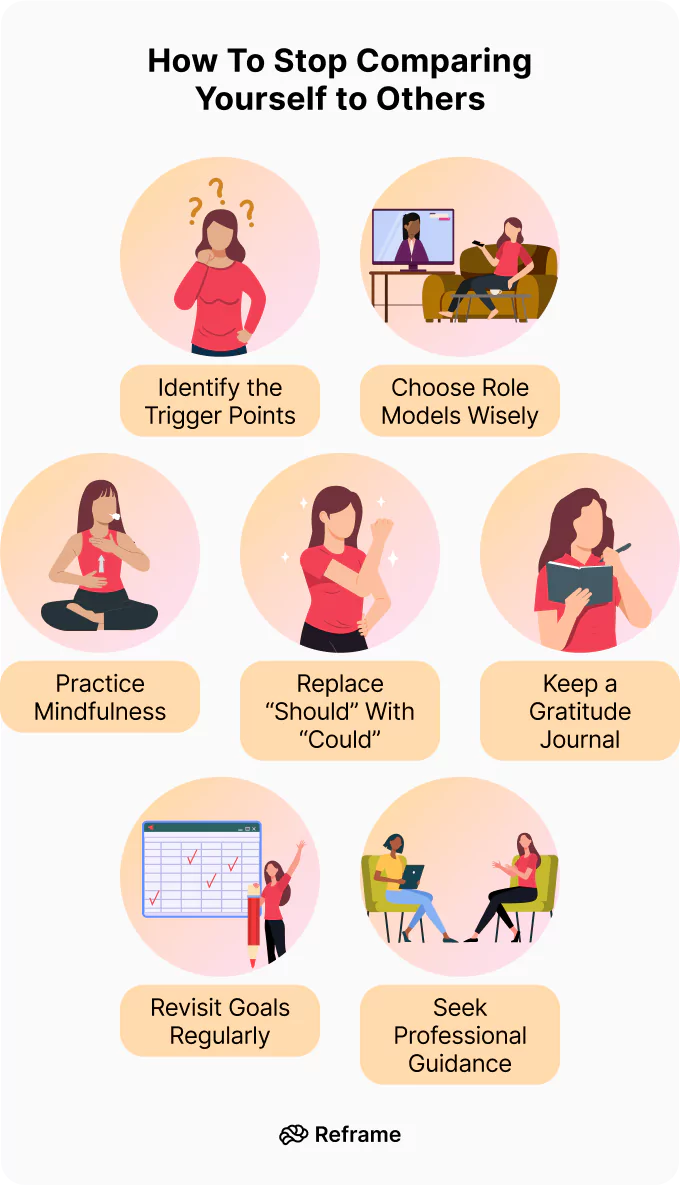
Recognize your triggers and emotional responses.
Social Media’s Role
Curated online presences rarely reflect full truths.
Practice mindful scrolling; question what you see.
Shifting Focus
Your unique journey and progress are your only true metrics.
Celebrate small wins; practice daily gratitude for your own life.
Building Resilience
Self-compassion is a powerful antidote to self-criticism.
Name your inner critic to create distance from negative thoughts.
Long-Term Peace
Consistency in self-awareness and positive habits is crucial.
Integrate self-care and boundary setting into your routine.
Understanding the Urge to Compare
Let’s agree: the urge to compare yourself to others is deeply human. It stems from our primal need for social validation and a desire to understand where we fit in. However, in our modern context, this natural inclination often morphs into a source of anxiety and self-doubt.
Referência: www.joinreframeapp.com
Expert Tip: Recognize that comparison is often a symptom, not the root cause. It frequently signals underlying feelings of inadequacy or a lack of self-worth. Addressing these core issues is paramount.
Imagine! You’re not alone in feeling this way. Understanding this commonality can be the first step toward compassion for yourself.
Referência: www.audible.com
The Role of Social Media in Comparison
Social media platforms are powerful tools, but they’ve also become comparison traps. We’re constantly exposed to highlight reels, curated to perfection. It’s crucial to remember that what you see online is often a carefully constructed narrative, not the full, messy reality of someone’s life.
As Psychology Today points out, people curate their online presence. They share their best moments, their triumphs, and often omit their struggles. This creates a skewed perception, making it easy to feel like your ‘behind-the-scenes’ doesn’t measure up to someone else’s ‘highlight reel’.
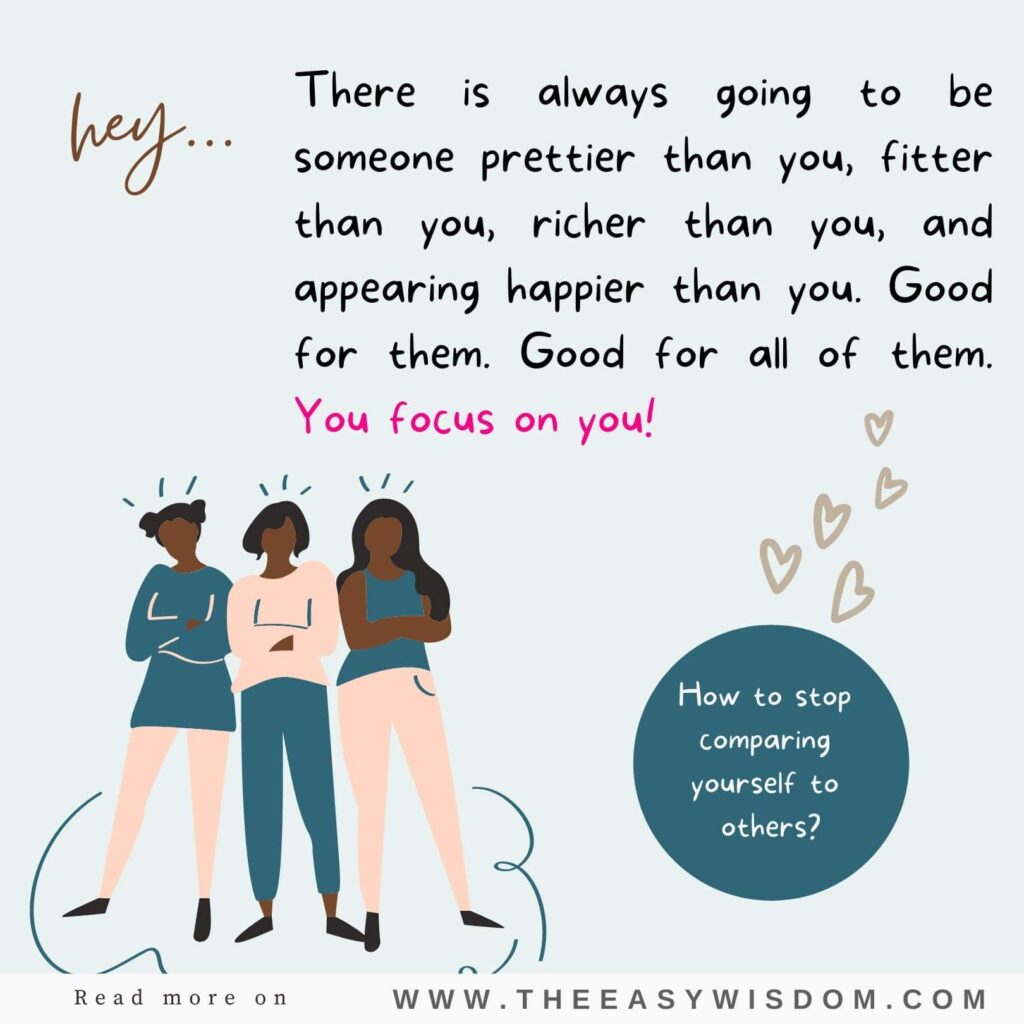
Referência: theeasywisdom.com
Online Persona
Real-Life Reality
Flawless vacation photos
Stressful travel, minor mishaps
Career achievements
Years of hard work, setbacks, doubts
Perfect relationships
Arguments, compromises, daily effort
Practical Strategies to Break the Habit
Breaking the comparison habit requires conscious effort and consistent practice. Don’t worry, these strategies are tried and tested.
Limit Exposure: Schedule your social media time. Consider ‘digital detoxes’ to reset your perspective.
Shift Your Focus Inward: Redirect your energy to your own goals and progress. What are you building? What are you learning?
Practice ‘Compare Up and Down’: If you must compare, also compare yourself to past versions of yourself or those facing greater challenges. This fosters gratitude.
Celebrate Your Wins: Keep a ‘win journal’. Acknowledge your accomplishments, big or small.
Cultivating Self-Gratitude and Self-Awareness
True inner peace comes from within. Cultivating self-gratitude and self-awareness are cornerstone practices. This means acknowledging your unique strengths, appreciating your journey, and understanding your own emotional landscape.
Referência: medium.com
One powerful technique is to name your inner critic. As Healthline suggests, giving your inner critic a name can help you distance yourself from its negative self-talk. It’s not ‘you’ talking; it’s ‘Barry’ or ‘Brenda’ trying to undermine you. This simple act creates a crucial separation, allowing you to challenge those thoughts more effectively.
Expert Tip: Start a daily gratitude practice. List three things you’re genuinely grateful for about yourself or your life. This rewires your brain to seek out the positive.
Referência: biggsuccess.com
Mental Shifts for Long-Term Change
Beyond practical steps, lasting change requires profound mental shifts. You must internalize that your worth is inherent, not comparative. Your journey is uniquely yours, with its own pace, challenges, and triumphs.
Embrace the concept of ‘enoughness’. You are enough, exactly as you are, right now. This doesn’t mean complacency; it means operating from a place of self-acceptance rather than constant striving for external validation.
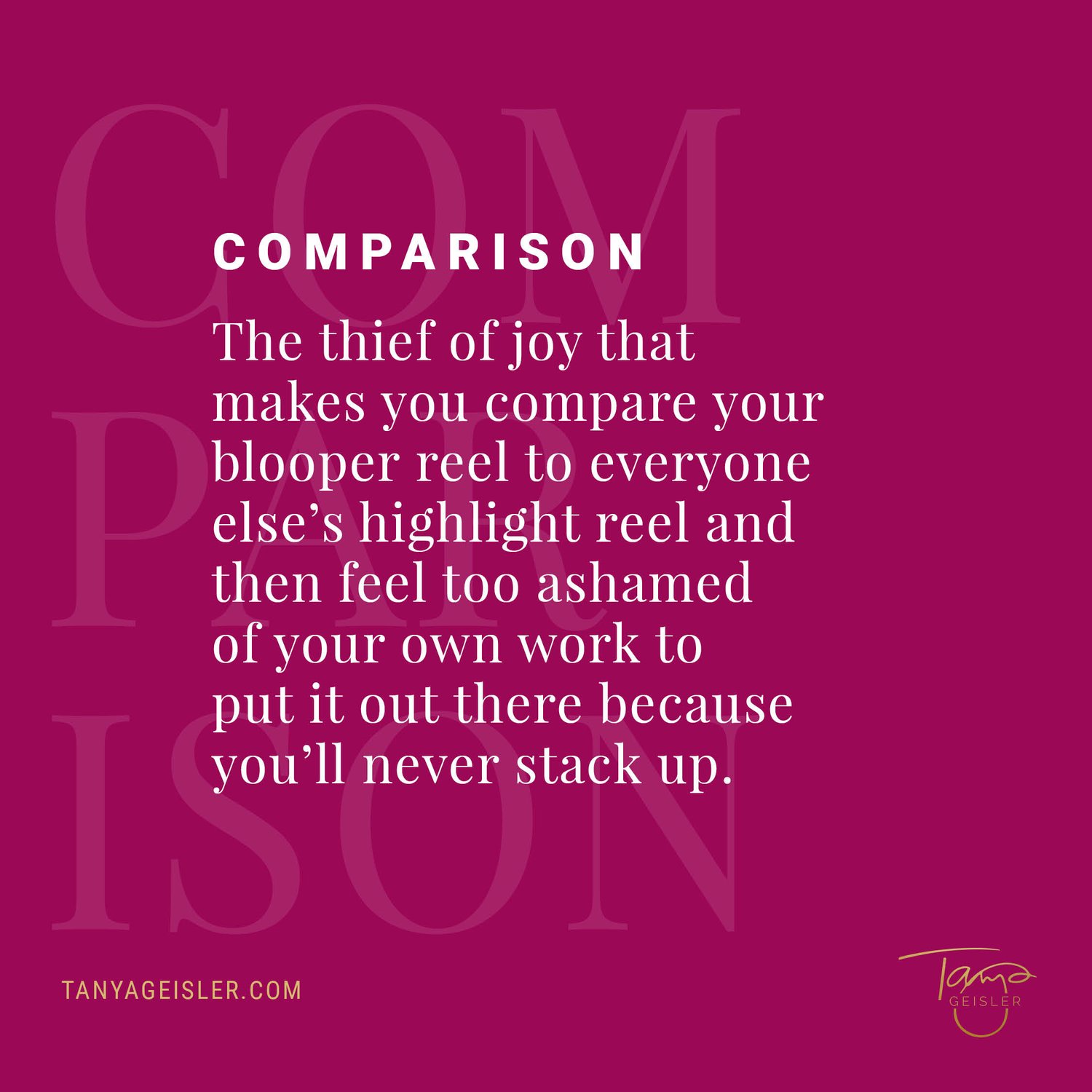
Referência: tanyageisler.com
The Profound Impact: Real Benefits and Challenges of Ending Comparison
Stepping away from the comparison trap unlocks a cascade of positive changes in your life. But, like any significant personal growth, it comes with its own set of hurdles.
Benefits:
Authentic Self-Expression: You’ll feel freer to be yourself, without the pressure to conform.
Increased Joy and Contentment: Your happiness will no longer be dictated by others’ perceived successes.
Stronger Relationships: Genuine connections thrive when you’re not competing or feeling envious.
Reduced Anxiety and Stress: The constant mental gymnastics of comparison are exhausting; letting go brings calm.
Enhanced Motivation: Your drive becomes internally generated, focused on personal growth, not external benchmarks.
Challenges:
Deeply Ingrained Habit: Comparison is often a lifelong pattern, requiring consistent effort to break.
Social Media’s Persistence: The digital landscape constantly presents opportunities for comparison.
Fear of Missing Out (FOMO): Disconnecting can feel like losing touch, triggering anxiety.
Internal Resistance: Your ego might resist giving up the ‘comfort’ of knowing where you stand relative to others.
Redefining Success: Shifting from external metrics to internal fulfillment can be a complex re-evaluation.
Dispelling Illusions: Myths and Truths About Stopping Comparison
There are many misconceptions about what it means to stop comparing yourself to others. Let’s separate the myths from the empowering truths.
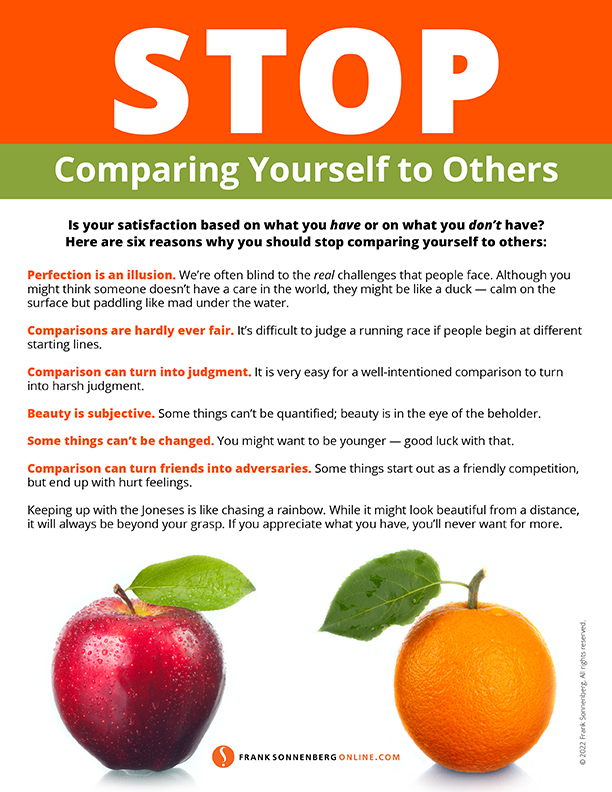
Referência: www.franksonnenbergonline.com
Myth: Stopping comparison means you’ll lose all motivation.
Truth: This is a common fear, but it’s unfounded. When you stop comparing, your motivation shifts from external validation to internal drive. You become motivated by personal growth, passion, and genuine achievement, rather than the need to ‘keep up’ or ‘be better’ than someone else. This internal motivation is far more sustainable and fulfilling.
Myth: Comparison is always bad and should be completely eliminated.
Truth: While constant, negative comparison is detrimental, selective and conscious comparison can be a tool for growth. For example, observing someone’s dedication to a craft might inspire you to work harder on your own skills. The key is to differentiate between inspiration and envy, and to always return the focus to your own path and values.
Referência: self-believer.com
Myth: It’s easy; you just decide to stop.
Truth: If only it were that simple! Stopping comparison is a journey, not a single decision. It involves rewiring years of habitual thinking, challenging deeply held beliefs, and consistently practicing self-compassion and mindfulness. There will be good days and challenging days. Progress is not linear, but every conscious choice to redirect your focus is a victory.
Myth: Once you stop comparing, you’ll never feel envious again.
Truth: Envy is a human emotion, and it may still arise occasionally. The difference is how you respond to it. Instead of letting envy consume you, you’ll develop the tools to acknowledge the feeling, understand its source, and then consciously choose to pivot to gratitude for what you have, or to use it as a signal for what you might genuinely desire and work towards for yourself.
Extra Tips
Practice Gratitude Daily: Make it a habit to list things you’re thankful for. This shifts your focus from what others have to what you possess, acting as a powerful antidote to comparison.
Curate Your Social Media Feed: Unfollow accounts that trigger feelings of inadequacy. Remember, people often present a highlight reel, not reality.
Celebrate Small Wins: Acknowledge and appreciate your own progress, no matter how minor. This builds internal validation.
Set Realistic Goals: Unrealistic expectations fuel comparison. Break down larger ambitions into manageable steps.
Embrace Imperfection: Understand that everyone faces challenges. Perfection is an illusion.
Frequently Asked Questions
How can I stop comparing myself to others on social media?
Social media often showcases curated perfection. To combat this, consciously remind yourself that you’re seeing a highlight reel. Unfollow accounts that consistently make you feel inadequate and focus on mindful social media use. Naming your inner critic can also help you distance yourself from negative self-talk.
What’s the fastest way to overcome comparison?
While there’s no magic bullet, a quick shift can come from focusing on your own journey. Engage in activities that boost your self-esteem and practice gratitude. Recognizing your own strengths is key to breaking free from the comparison trap.
Is it normal to compare myself to others?
It’s a very common human tendency, especially in today’s connected world. The key isn’t to eliminate comparison entirely, but to manage it effectively. Understanding why you compare and developing strategies to stop social comparison are crucial for your well-being.
Conclusion
Breaking free from the comparison trap is a journey, not a destination. By implementing these strategies, you’re well on your way to cultivating a more peaceful and confident inner world. Remember to celebrate your unique path and acknowledge that overcoming comparison is an ongoing practice. Perhaps exploring the power of internal validation or understanding how gratitude acts as an antidote to comparison could be your next steps in this empowering process.
Aisha Corbin is a dedicated beauty researcher and product formulation consultant with a passion for ingredient transparency. After years working in the labs of cosmetic brands, she grew frustrated with marketing claims that overshadowed scientific truth. This inspired her to create her column as a trusted resource. Aisha specializes in breaking down complex ingredient lists and reviewing products based on their formulation and user results. She has collaborated with numerous skincare startups to help them develop effective, evidence-based products and is a respected voice in online beauty communities for her meticulous, unbiased analysis.